

Developing an oral snakebite
treatment for dogs
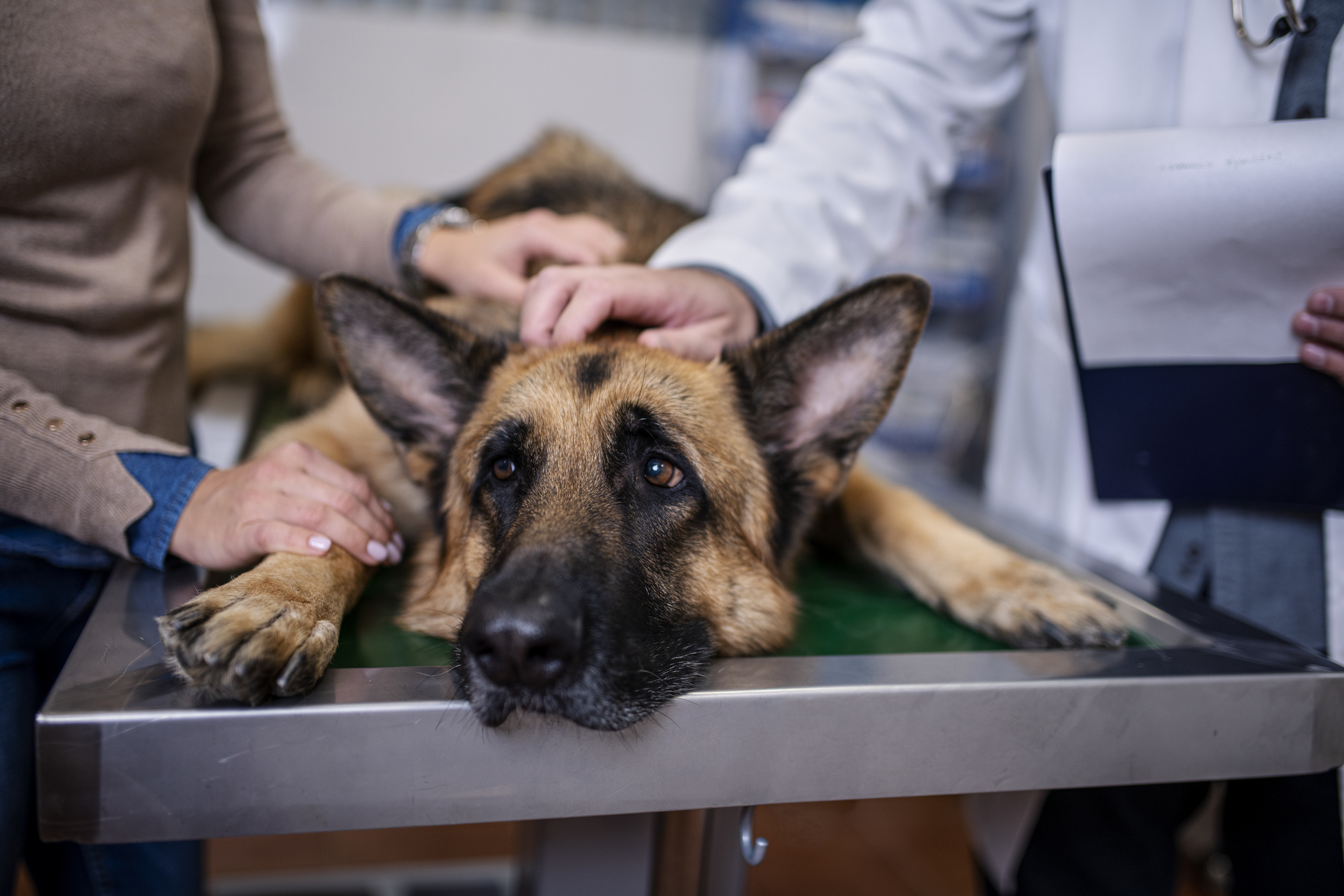
Approximately 50,000 dogs are bitten by venomous snakes each year in the United States.1 , 2 Ophirex is investigating varespladib as a first-of-its-kind oral rescue treatment for snake-bitten dogs.
In 2025, Ophirex received Minor Use and Minor Species (MUMS) designation from the FDA’s Center for Veterinary Medicine for the use of varespladib for the treatment of snakebite in dogs when antivenom is not immediately available. The MUMS designation is intended to make more drugs available to veterinarians and animal owners for the treatment of minor animal species and, relevant here, for the treatment of uncommon diseases in major animal species.
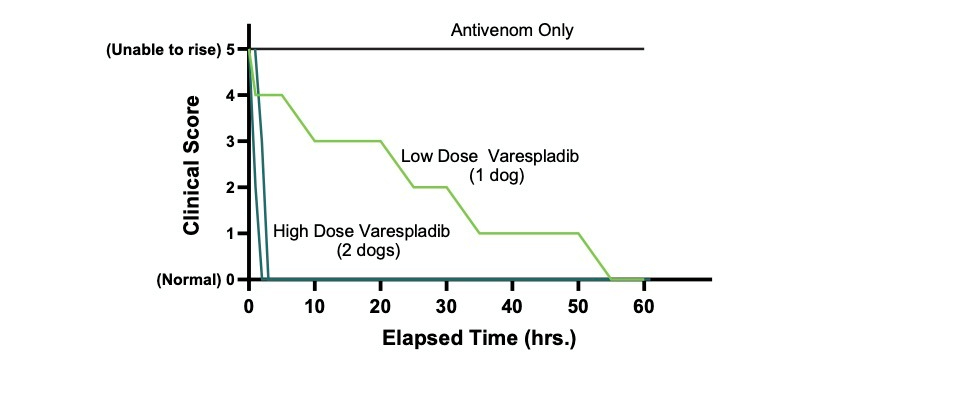
Recovery from coral snake envenomation
following varespladib treatment in 3 dogs
Study of varespladib
in dogs

Varespladib is the subject of an investigator-initiated study in snake-bitten dogs.
Generally, veterinary teams find that it takes five to seven days (120-168 hours) for a dog to recover after a severe coral snake bite.
Interim results of an open-label study being conducted by researchers at the University of Florida College of Veterinary Medicine in Gainesville, Florida found that dogs treated with varespladib after coral snake envenomation had significantly shorter hospitalization time (50-70 hours) than previously published hospitalization duration (187-196 hours) without intervention with varespladib. In the study, all dogs (n=3) made a complete and expedited recovery and none of the dogs required mechanical ventilation. There were no adverse events.3
Publications
Citations
- Johnston AN, Schmidt JO. The effect of Africanized honey bees (Hymenoptera: Apidae) on the pet population of Tucson: a case study. Am Entomol. 2001;47(2):98-103. doi:10.1093/ae/47.2.98
- Peterson ME. Snake bite: pit vipers. Clin Tech Small Anim Pract. 2006;21(4):174-182. doi: 10.1053/j.ctsap.2006.10.008
- Woliver C, Kastenholz V, Southern C, et al. Phospholipase A2 inhibitor may shorten the duration of clinical signs in the treatment of neurotoxicity caused by eastern coral snake (Micrurus fulvius) envenomation in 3 dogs. J Am Vet Med Assoc. 2025;262(6):1-7. doi:10.2460/javma.25.04.0275